

 1800 769 577


Paul Maric visits Utemaster to see what makes a canopy worth trusting
Posted on 26 July 2026 by Utemaster
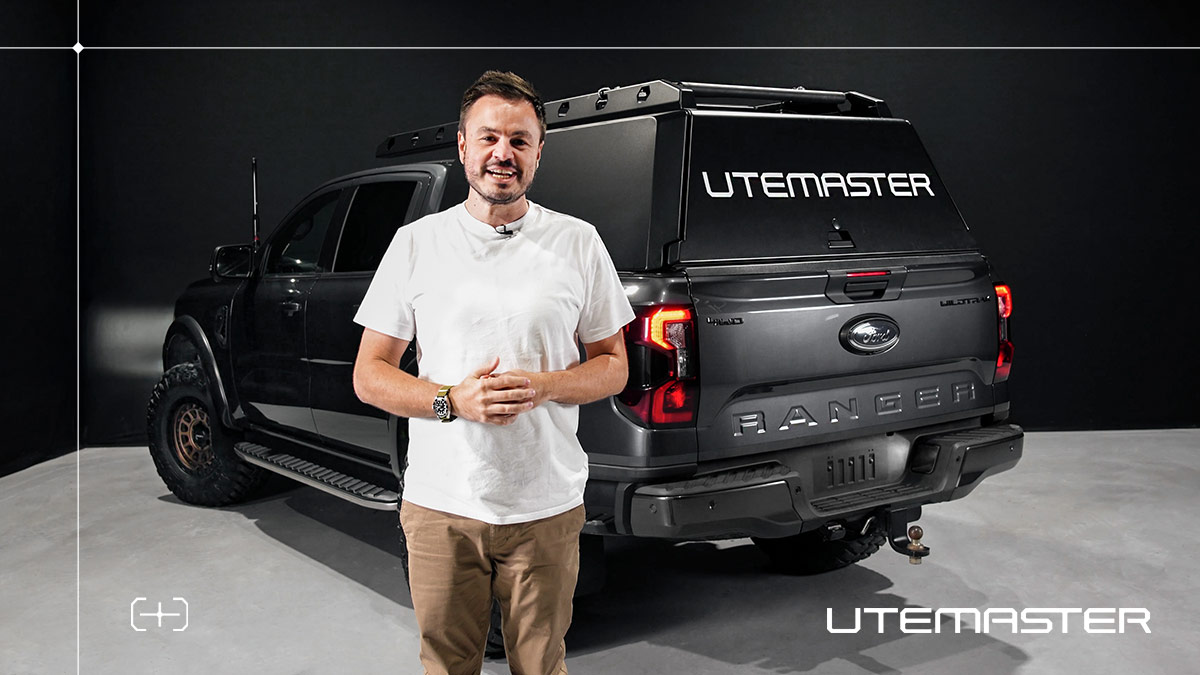
Mechanical engineer and CarExpert co-founder Paul Maric visited the Utemaster factory in New Zealand to see what goes into designing, manufacturing and testing an aluminium ute canopy built for real-world use.
Most ute owners only ever see the finished product.
The canopy is fitted, the doors are closed, and the ute is ready for the next job, the next trip, or the next track. What's less visible is the work that happens before that point: the vehicle data, engineering decisions, material selection, manufacturing process and testing that determine how the canopy will perform over time.
While in New Zealand for CarExpert’s 2026 Mega Test, Paul visited Utemaster to look beyond the finished canopy and understand what happens before it ever reaches the ute.
What makes a canopy worth trusting?
A canopy can look the part from the outside, but the real difference is often in the details buyers don't see.
As Paul puts it, he is “all about quality engineering and products that are going to fit your vehicle properly and that have been engineered properly.”
For ute owners, those details matter. A canopy is expected to protect tools, equipment and camping gear, carry loads, handle repeated use, keep out water and dust, and integrate properly with the vehicle it is fitted to.
Paul’s visit looked beneath the finished product to understand how those details come together in the Utemaster Centurion Canopy.

Who is Paul Maric?
Paul Maric is a mechanical engineer by training, co-founder of CarExpert, and host of the CarExpert YouTube channel.
He launched his first automotive website at 17 and has since built more than two decades of experience across automotive journalism, video, web, print and radio.
His mechanical engineering background gives him a technical perspective on vehicle design, manufacturing and performance.
That made his visit to the Utemaster factory especially relevant.
Looking beyond the finished product
There are plenty of products available for the back of a ute, but they aren't all designed or manufactured in the same way.
During the factory visit, Paul followed the process from vehicle scanning and product development through to CNC machining, robotic welding, assembly and testing.
The aim was to look past the exterior and understand what separates a properly engineered canopy from a setup that simply looks ready for use.
It starts with designing each canopy around the vehicle it will be fitted to.
Engineered around the ute
“Every new ute gets 3D scanned,” Paul explains. “Instead of universal fit gear that sort of works on everything, you get accessories that actually integrate properly with your ute.”
This gives the Utemaster engineering team detailed vehicle data to work from, allowing each canopy to be designed around the dimensions, mounting locations and body shape of that specific ute.
Vehicle-specific design helps the canopy integrate properly with the tub, align with the vehicle and transfer loads through the intended factory mounting locations. That differs from producing a universal accessory and adapting it across multiple vehicles.
Once the digital design is complete, the process moves into manufacturing through CNC machining, precision extrusion and robotic welding.

Strength without taking over your payload
Paul also points to the role of 5052-grade aluminium and Utemaster’s Strong Bones bracing system, which is designed to distribute weight through the factory mounting points of the tub.
This strength-to-weight ratio is important because ute owners often carry a combination of tools, recovery gear, drawers, electrical systems, camping equipment and roof-mounted accessories. A heavy canopy can reduce available payload before the ute is even loaded for work or travel.
This becomes especially important when the vehicle is carrying equipment on the roof or travelling over corrugations, uneven tracks and rough worksites.

Why fully-welded construction matters
The Centurion Canopy is supplied as a fully-welded accessory, rather than a flat-packed product assembled from multiple panels.
That difference matters once a ute starts being used in real conditions. Corrugations, chassis movement, uneven tracks, roof loads and repeated opening and closing can introduce movement through the vehicle and everything attached to it. Over time, those conditions can expose flex, vibration and weak points within a structure.
A fully welded construction reduces reliance on a large number of panel joins and assembly fasteners to hold the main canopy body together.
“Off-road punishment exposes shortcuts very quickly,” Paul says.
Testing for the things buyers rely on
Paul describes the product as “validated and tested to destruction” before it is fitted to a customer’s vehicle.
A ute canopy needs to survive more than a showroom inspection. It has to keep working when the vehicle is loaded, the tracks become rough, and the weather changes.
This means testing needs to account for the conditions ute owners are likely to encounter, including:
- Corrugations and vehicle movement
- Dynamic and static roof loads
- Water ingress
- Dust
- Repeated opening and closing
- Long-term use on and off road
The testing process allows the engineering team to identify weaknesses, make changes and validate the final design before it reaches the customer.

Protecting what's inside
Strength is only part of what a canopy needs to provide.
For many owners, the back of the ute contains tools, recovery equipment, camping gear, electrical systems and other valuable items.
The Centurion Canopy uses central locking connected to the vehicle’s factory key fob, with no exposed external key barrels or obvious lock points.
It also incorporates automotive sealing systems, weatherproof hinges and drainage channels designed to manage water before it reaches the gear inside.
Optional venting can also help manage pressure differences and reduce dust being drawn into the tub when travelling in dry conditions.
As Paul puts it, “nobody wants thousands of dollars’ worth of gear getting soaked or covered in red dust.”

Designed and manufactured in New Zealand
Paul also highlighted the value of local manufacturing, saying he is “a big fan of local manufacturing and creating jobs in this part of the world.”
Utemaster designs, engineers and manufactures its canopy systems in New Zealand, taking raw aluminium through the machining, welding, assembly and testing stages within its own operation.
For Paul, seeing the full process happen in New Zealand added important context to the finished product. It showed how engineering decisions, material selection and manufacturing methods all influence how a canopy performs once it leaves the factory.
The difference is in the detail
A quality ute canopy is not defined by one feature.
It's the result of multiple decisions working together:
- Designing the canopy around the specific ute
- Using strong but lightweight aluminium
- Reinforcing the structure internally
- Fully welding the main canopy body
- Testing for load, movement, dust and water
- Protecting the contents with secure locking and sealing
- Controlling the manufacturing process from design through to assembly
These are the details that determine whether a canopy just looks-the-part or still performs after years of work, travel and everyday use.
Explore the Centurion Canopy
The Utemaster Centurion Canopy combines vehicle-specific engineering, fully welded aluminium construction, central locking and proven water and dust protection.
It is designed for ute owners who need a canopy that can carry gear, protect equipment and handle real-world conditions.